




House vs Apartment vs Townhouse: Which Is Best for First Home Buyers in Australia?
Choosing your first home is about more than finding the right suburb—it’s also about selecting the property type that best suits your budget, lifestyle and long-term goals.
For many Australians, the decision comes down to three options: a house, an apartment or a townhouse. Each offers different advantages, ongoing costs and investment potential.
Whether you’re considering a first home apartment in the city, comparing a townhouse vs house, or weighing up maintenance against space, understanding the differences can help you make a confident decision.
This guide compares all three property types to help first-home buyers choose the option that’s right for them.
New to buying property? Start with our The Complete Guide to Buying Your First Home in Australia, which explains every stage of the home-buying journey—from saving your deposit to settlement.
Understanding the Three Property Types
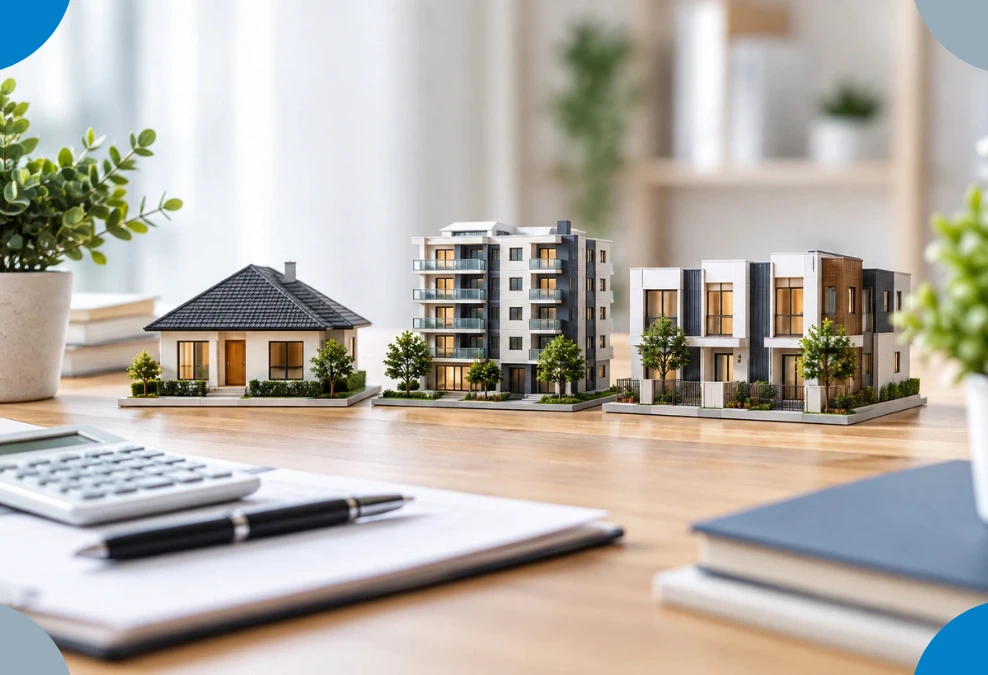 Before comparing them, it’s helpful to understand what each property type typically offers.
House
A house is a freestanding dwelling on its own block of land. Owners generally have full control over the property and land, subject to local planning regulations.
Common features include:
- Private backyard
- Greater internal living space
- Garage or driveway
- More privacy
- Land ownership
Houses are often the preferred choice for families or buyers planning to stay in one location for many years.
Apartment
An apartment is an individual residence within a larger building or complex. Owners usually share common areas and facilities with other residents.
A first home apartment is often the most affordable way to enter the property market, particularly in Australia’s capital cities.
Apartments may include:
- Shared lifts and hallways
- Secure building access
- Gyms or swimming pools
- Balconies
- Basement parking
Apartment owners also contribute to ongoing strata (body corporate) fees that cover maintenance of shared areas.
Townhouse
A townhouse sits somewhere between a house and an apartment.
Townhouses are generally multi-level homes with shared walls but private entrances and, in many cases, small courtyards or gardens.
Many first-home buyers compare townhouse vs house because townhouses offer more space than apartments while often costing less than detached homes.
House vs Apartment vs Townhouse: Quick Comparison
| Feature | House | Apartment | Townhouse |
| Purchase price | Highest | Lowest | Mid-range |
| Land ownership | Yes | No | Limited or shared |
| Outdoor space | Large | Minimal | Small courtyard |
| Maintenance | Highest | Lower | Moderate |
| Strata fees | Usually none | Yes | Often yes |
| Privacy | Highest | Lowest | Moderate |
| Space | Largest | Smallest | Medium |
| Capital growth potential | Often strong | Varies | Strong in many areas |
Buying a First Home Apartment
For many Australians, buying a first home apartment provides an affordable entry into the property market.
Advantages
Lower Purchase Price
Apartments are generally more affordable than houses in the same suburb, making them attractive to buyers with smaller deposits.
Desirable Locations
Many apartments are located close to:
- Public transport
- Universities
- Employment hubs
- Restaurants and cafés
- Entertainment precincts
This can reduce commuting time and increase lifestyle convenience.
Lower Maintenance
Without a large garden or extensive exterior maintenance, apartment living often requires less time and effort.
This suits busy professionals and first-home buyers with demanding work schedules.
Disadvantages
Apartment owners should also consider:
- Ongoing strata fees
- Shared walls and common areas
- Potential restrictions on renovations
- Limited outdoor space
- Smaller floor plans
Reviewing the strata records before purchasing can help identify future maintenance costs or special levies.
Buying a House
Owning a house remains the dream for many Australians.
Advantages
More Space
Houses generally provide:
- Larger living areas
- Bigger kitchens
- Multiple bathrooms
- Private gardens
- Room for extensions
This flexibility appeals to growing families and buyers planning to stay long term.
Land Ownership
Land often plays a significant role in long-term capital growth.
While property markets vary, land is generally considered a valuable long-term asset.
Greater Privacy
Detached homes typically offer:
- Fewer shared walls
- More separation from neighbours
- Larger outdoor areas
- Greater freedom for renovations (subject to council approval)
Disadvantages
Buying a house usually involves:
- Higher purchase prices
- Larger deposits
- Increased maintenance
- Gardening responsibilities
- Higher insurance costs
For many first-home buyers, affordability can be the biggest challenge.
Townhouse vs House: Which Is Better?
One of the most common questions among buyers is whether to choose a townhouse vs house.
The answer depends on your priorities.
Townhouse Advantages
Townhouses often provide:
- More affordable purchase prices than houses
- More internal space than apartments
- Small private outdoor areas
- Lower maintenance than detached homes
- Popular suburban locations
Many townhouses are located in newer residential developments with modern designs and convenient access to schools, parks and shopping centres.
House Advantages
Compared with townhouses, houses usually offer:
- Larger land size
- More privacy
- Greater renovation opportunities
- No shared walls
- Fewer strata restrictions (where applicable)
If long-term family living is your goal, a house may provide greater flexibility.
Consider the Ongoing Costs
The purchase price is only one part of the equation.
Different property types come with different ongoing expenses.
House
Owners may need to budget for:
- Lawn maintenance
- Roof repairs
- Exterior painting
- Fencing
- Drainage
- Council rates
- Home insurance
Apartment
Common ongoing costs include:
- Strata levies
- Building insurance contributions
- Maintenance funds
- Council rates
- Utilities
Townhouse
Townhouse owners may pay:
- Strata fees (if applicable)
- Shared maintenance costs
- Council rates
- Home and contents insurance
Understanding these expenses before purchasing can help you avoid financial surprises.
Which Property Type Has Better Investment Potential?
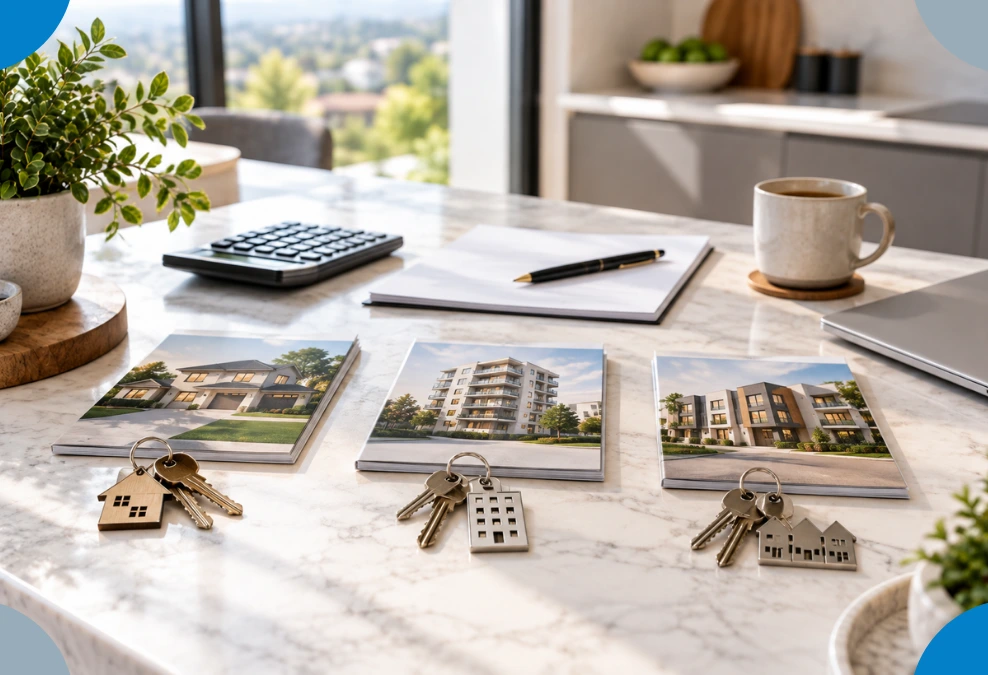
There is no universal answer, as performance depends on location, demand and market conditions.
Generally:
- Houses often benefit from land value appreciation over the long term.
- Apartments may offer lower entry prices and attractive rental demand in well-located urban areas.
- Townhouses can provide a balance between affordability and growth, particularly in growing suburban markets.
Rather than focusing solely on historical growth, consider factors such as employment opportunities, infrastructure projects, transport links and local amenities.
Questions to Ask Before Choosing
Before deciding between a house, apartment or townhouse, ask yourself:
- What is my maximum budget?
- How much deposit have I saved?
- Do I want outdoor space?
- Am I comfortable paying strata fees?
- How long do I plan to stay?
- Do I want a low-maintenance lifestyle?
- Will my family or work situation change over the next five to ten years?
- Is future resale value important to me?
Answering these questions can help narrow your options.
Tips for First Home Buyers
No matter which property type you choose, consider these practical tips:
- Get home loan pre-approval before property hunting.
- Research recent sales in your preferred suburbs.
- Arrange building and pest inspections where appropriate.
- Review strata reports carefully for apartments and townhouses.
- Factor in ongoing ownership costs, not just the purchase price.
- Leave room in your budget for unexpected expenses after settlement.
Taking a long-term view can help you buy a property that continues to meet your needs as your circumstances change.
Final Thoughts
There is no single “best” property type for every first-home buyer. A house may offer space and long-term flexibility, an apartment can provide an affordable entry into desirable locations, and a townhouse often strikes a balance between the two.
The right decision depends on your budget, lifestyle, future plans and comfort with ongoing ownership costs. By comparing the advantages and trade-offs of each option, you’ll be better equipped to choose a property that suits both your current needs and your long-term goals. If you’re considering your finance options, you can also compare home loan options to find a loan that suits your circumstances.
If you’re still in the early stages of your home-buying journey, understanding the differences between property types is just one part of the process.
For a complete roadmap from saving your deposit and securing finance to making an offer and settling on your first property read The Complete Guide to Buying Your First Home in Australia.
FAQ's
Yes. A first home apartment can be an affordable way to enter the property market, particularly in cities where detached houses may be beyond the budget of many first-home buyers.
When comparing townhouse vs house, the right choice depends on your lifestyle and finances. Townhouses often offer a good balance between affordability, space and maintenance, while houses provide greater privacy and land ownership.
Most apartments are part of a strata scheme, meaning owners contribute regular levies to maintain common property and shared facilities.
Apartments generally require the least day-to-day maintenance, as building exteriors and common areas are managed collectively through the strata scheme.