





Why Use an Experienced Mortgage Broker like Oz Lend?
Choosing a home loan can be overwhelming. There are rates to compare. Then come the fees, loan features and terms, and lender policies. You may also have questions about what you can borrow and which lenders might suit your circumstances.
You don’t have to work through all of that alone!
An experienced mortgage broker can help you compare available home loan options and explain the differences between them. You can talk through your situation, ask questions and get a clearer idea of what each option involves.
Whether you’re buying your first home, reviewing your current mortgage or looking for a different loan structure, having the right information can make the next step easier.
 What Does an Experienced Home Loan Mortgage Broker Do?
A mortgage broker helps borrowers compare home loan products from lenders available through their lending panel.
This process starts with understanding your circumstances. Your income, deposit, existing debts, property plans and financial goals can all affect the loans you may be able to consider.
An experienced mortgage broker can help you:
- Compare home loan products
- Review interest rates and fees
- Understand loan features
- Compare repayment structures
- Explain lender requirements
- Prepare your application
- Submit documents to the lender
- Communicate with the lender during the application.
This can save you from the time-consuming process of contacting several lenders yourself.
It also gives you someone to talk to when a loan document or lending requirement doesn’t make sense. That can be particularly useful when you’re dealing with unfamiliar terms or comparing several products at once.
For example, loan rates can look similar at first glance. Once you check the fees, loan features and repayment structure, the differences can become much clearer.
Mortgage Broker vs Bank Which Option Is Better?
A bank provides its own home loan products. A mortgage broker can compare products from multiple lenders available through their panel of lenders.
That gives you two different ways to approach your home loan search.
If you go directly to a bank, you’ll deal with that lender’s products and lending policies. If you work with a broker, you can discuss your circumstances once and compare options from different lenders.
| Mortgage Broker | Bank |
| Access to multiple lenders | Single lender products |
| Compare available options | Limited to the bank’s products |
| Personal guidance | Self-managed or bank-led process |
| Understand different lender policies | Works within its own policies |
| Compare loan features | Provides its own loan features |
Whichever path you take, look closely at the loan itself. The interest rate matters, but so do fees, features, repayment requirements and the loan term.
A lower advertised rate doesn’t automatically tell you what the loan will cost overall.
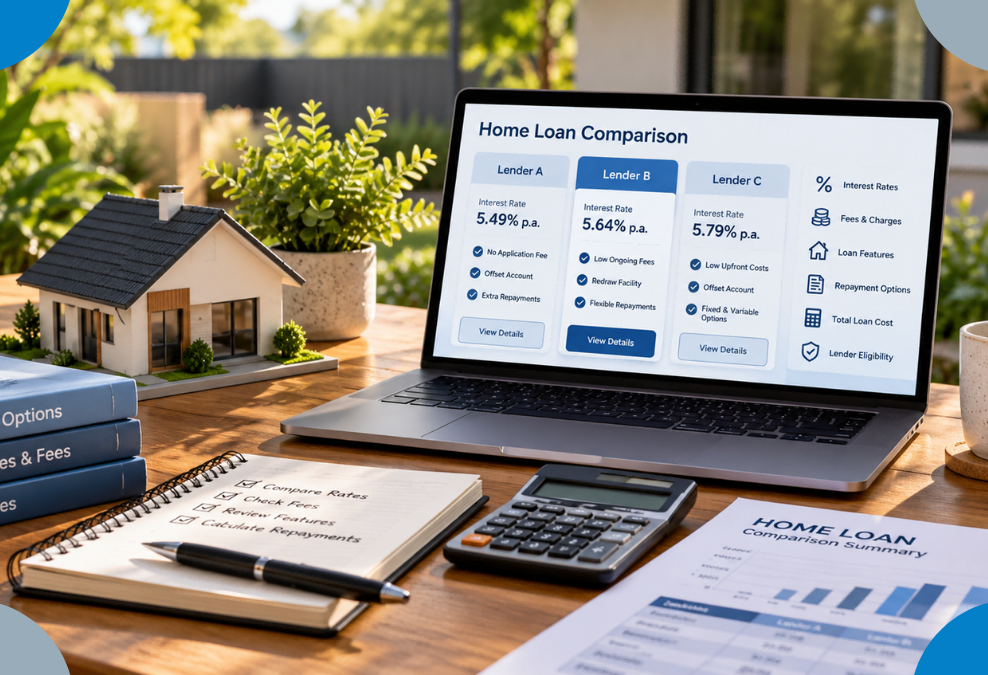 Why Use an Experienced Mortgage Broker Instead of Going Directly to a Bank?
You may already have a bank you trust. You may even have a good relationship with your current lender.
Still, it can be useful to see what else is available.
Contacting several lenders yourself takes time. You need to find the products, check their requirements, compare the costs and keep track of the information.
A broker can bring that comparison into one conversation.
This may help if you:
- Want to compare several lenders
- Need a specific loan feature
- Have changed your income or employment circumstances
- Want to review your existing mortgage
- Need help understanding lender requirements
- Aren’t sure which loan structure fits your plans
If you’re asking, “Can I refinance my home loan?” you can start by reviewing your current mortgage. Look at the rate, balance, remaining term, repayments and features. Then compare those details with other available options.
That gives you something concrete to work with before you decide whether changing lenders makes sense.
How Can an Experienced Mortgage Broker Help First Home Buyers?
Buying your first home brings plenty of questions.
How much can you borrow? How much deposit do you need? What will your repayments look like? Should you consider a fixed or variable rate?
It can get confusing quickly.
A home loan advisor can explain the lending process and help you understand the options available based on your circumstances. You can also ask questions as they come up rather than trying to work everything out from lender websites.
A broker may help you look at:
- Borrowing capacity
- Deposit requirements
- Loan terms
- Interest rate structures
- Repayment amounts
- Lender policies
- Application requirements
- Upfront and ongoing loan costs
The loan itself isn’t the only cost to consider when buying a property. You may also need to budget for expenses such as stamp duty, conveyancing, pest and building inspections and insurance.
Understanding these costs early can help you build a more realistic picture of what buying a home involves.
What Should You Consider When Comparing Home Loans?
The interest rate often gets the most attention. It shouldn’t be the only thing you compare.
Think about how the loan will work for you over time.
1- Interest Rate and Comparison Rate
The interest rate affects the interest charged on your loan. The comparison rate can help you consider the interest rate alongside certain fees and charges.
Check the details of each product before you compare the figures.
2- Loan Fees
Application fees, ongoing fees, valuation costs and other charges can add to your borrowing costs.
A small difference in the rate may not tell you much if another loan has significantly different fees.
3- Loan Term
Your loan term affects both your repayments and the total interest you may pay.
A longer term can reduce regular repayments. However, you may pay interest over a longer period.
4- Loan Features
Think about how you manage your money.
Would you use an offset account? Do you want redraw access? Would you like to make extra repayments?
Features only add value when they suit the way you use your loan.
5- Fixed or Variable Rate
A fixed rate can give you greater repayment certainty during the fixed period. A variable rate can change over time. You may also consider a part fixed – part variable loan.
Your plans and financial circumstances can help determine which structure you want to consider.
6- Refinancing Costs
Planning to replace an existing mortgage? Check the costs before you make the switch.
You may need to account for discharge fees, fixed-rate break costs, application fees, valuation costs and other charges.
When comparing home mortgage loans, consider the complete cost of each option rather than focusing on the advertised rate alone.
 Why Choose Oz Lend as Your Experienced Mortgage Broker?
A mortgage broker gives you one place to start. You can explain what you need, discuss your current situation and compare available options without contacting every lender yourself. That can help when your circumstances don’t fit a simple lending scenario.
For example, you may be self-employed. You may have an investment property. Perhaps you’re buying your first home or reviewing an existing mortgage after several years.
Different lenders can have different lending policies. Understanding those differences can help you identify which options are worth exploring.
A local mortgage broker can also help you prepare the information and documents needed for an application. Once you choose an option, they can assist with the application and communicate with the lender through the process.
Speak With the Best Mortgage Broker About Your Home Loan
A home loan is a long-term commitment. Taking a little time to understand your options can make the process feel much more manageable.
You don’t need to know every lender policy or understand every mortgage term before you start. Begin with your circumstances and the questions you want answered.
If you’re considering a mortgage refinance, buying your first home or reviewing your existing mortgage, speak with Oz Lend’s home loan advisor on 1300 438 669 to discuss your requirements or book a free consultation.