





Settlement Day Explained: What First Home Buyers Need to Expect in Australia
Settlement day is one of the most exciting milestones in the home-buying journey. After months or even years of saving, searching for the right property, securing finance and signing contracts, settlement is the day ownership of your new home officially transfers to you.
While many first-home buyers imagine collecting the keys and moving in immediately, there’s a lot happening behind the scenes to make settlement possible. Your lender, conveyancer, the seller’s legal representative and government authorities all play important roles in completing the transaction.
Understanding how settlement works can help you prepare for the final stage of buying your first home and avoid unnecessary stress.
Buying your first property? Read our The Complete Guide to Buying Your First Home in Australia for a complete step-by-step guide covering every stage of the home-buying journey from saving your deposit to moving into your new home.
What Is Settlement Day?
Settlement day is the legal completion of a property purchase.
On this day:
- The purchase price is paid to the seller.
- Ownership of the property transfers to the buyer.
- The mortgage is registered (if applicable).
- The property title is transferred.
- The buyer officially becomes the legal owner.
Once settlement is complete, you’ll usually receive the keys and can move into your new home, provided vacant possession applies under the contract.

How Long After Signing the Contract Is Settlement?
The settlement period is negotiated when the Contract of Sale is signed.
Common settlement periods include:
- 30 days
- 45 days
- 60 days
- 90 days
The agreed timeframe gives everyone involved enough time to:
- Finalise finance
- Complete legal documentation
- Arrange insurance
- Prepare transfer documents
- Organise the release of funds
Longer or shorter settlement periods can sometimes be negotiated depending on the needs of both the buyer and seller.
What Happens Before Settlement Day?
Several important steps occur before settlement.
Final Loan Approval
Your lender completes its assessment and issues unconditional approval.
You’ll usually sign:
- Loan documents
- Mortgage documents
- Direct debit authorities
Your lender then prepares the funds required for settlement.
Property Insurance
For most purchases, it’s recommended—or required under your loan conditions that you arrange building insurance before settlement.
If you’re purchasing an apartment, strata insurance may already cover parts of the building, but you’ll usually still need contents insurance once you move in.
Always confirm your insurance obligations with your conveyancer and lender.
Final Inspection
A final inspection, often called a pre-settlement inspection, is typically completed a few days before settlement.
This inspection allows you to confirm that:
- The property is in the agreed condition.
- Included fixtures remain.
- Agreed repairs have been completed.
- No new damage has occurred.
- The property has been vacated where required.
The final inspection is not another building inspection it simply checks that the property’s condition matches the contract.
Who Attends Settlement?
Unlike what many first-home buyers expect, buyers and sellers rarely attend settlement in person.
Instead, settlement is usually completed electronically or by legal representatives.
The parties involved often include:
- Your conveyancer or solicitor
- The seller’s conveyancer or solicitor
- Your lender
- The seller’s lender (if applicable)
- Land registry representatives through electronic settlement systems
Once everything has been confirmed, ownership is transferred and settlement is complete.
What Does Your Conveyancer Do?
Your conveyancer manages much of the legal work leading up to settlement.
Their responsibilities may include:
- Reviewing the Contract of Sale
- Conducting property searches
- Calculating settlement adjustments
- Preparing legal documents
- Liaising with your lender
- Organising settlement
- Registering ownership changes
A good conveyancer helps ensure the legal transfer proceeds smoothly.
What Does the Bank Do on Settlement Day?
Your lender plays a critical role by:
- Providing the approved loan funds.
- Confirming financial documentation.
- Registering the mortgage.
- Transferring money to the seller.
If you’re contributing additional funds beyond your loan, you’ll usually need to transfer these to your conveyancer’s trust account before settlement.
 Settlement Adjustments Explained
Before settlement, adjustments are made to account for property-related expenses that have already been paid by the seller.
These adjustments commonly include:
- Council rates
- Water rates
- Owners corporation (strata) fees
- Land tax (where applicable)
Rather than both parties paying for the same period, costs are divided according to the settlement date.
Your conveyancer calculates these adjustments before settlement.
What Happens If Settlement Is Delayed?
Although most settlements proceed smoothly, delays can occasionally occur.
Common reasons include:
- Loan funds not being available
- Missing legal documents
- Administrative errors
- Registration issues
- Unexpected banking delays
If settlement is delayed, the Contract of Sale usually outlines each party’s rights and obligations, including any applicable penalties or extensions.
Maintaining regular communication with your lender and conveyancer can help minimise the risk of delays.
When Do You Get the Keys?
In most cases, the real estate agent releases the keys once settlement has been confirmed.
Your conveyancer or lender will notify you when settlement has been completed.
You can then:
- Collect the keys.
- Move into your new home (if vacant possession applies).
- Begin setting up utilities and services.
Many buyers collect their keys later the same day.
 What Should You Do After Settlement?
Settlement marks the beginning of home ownership.
Shortly after collecting your keys, consider:
Change the Locks
For added security, many new homeowners choose to replace or rekey the locks, as previous owners or tenants may still have copies of the keys.
Connect Utilities
Arrange or confirm:
- Electricity
- Gas
- Water
- Internet
- Home phone (if required)
Scheduling connections in advance can help ensure everything is ready on move-in day.
Update Your Address
Notify relevant organisations of your new address, including:
- Banks
- Employer
- Electoral roll
- Insurance providers
- Driver licence authority
- Subscription services
Review Your Insurance
Once you’ve moved in, ensure your insurance adequately covers:
- Building
- Contents
- Valuable personal belongings
Review your policy annually as your circumstances change.
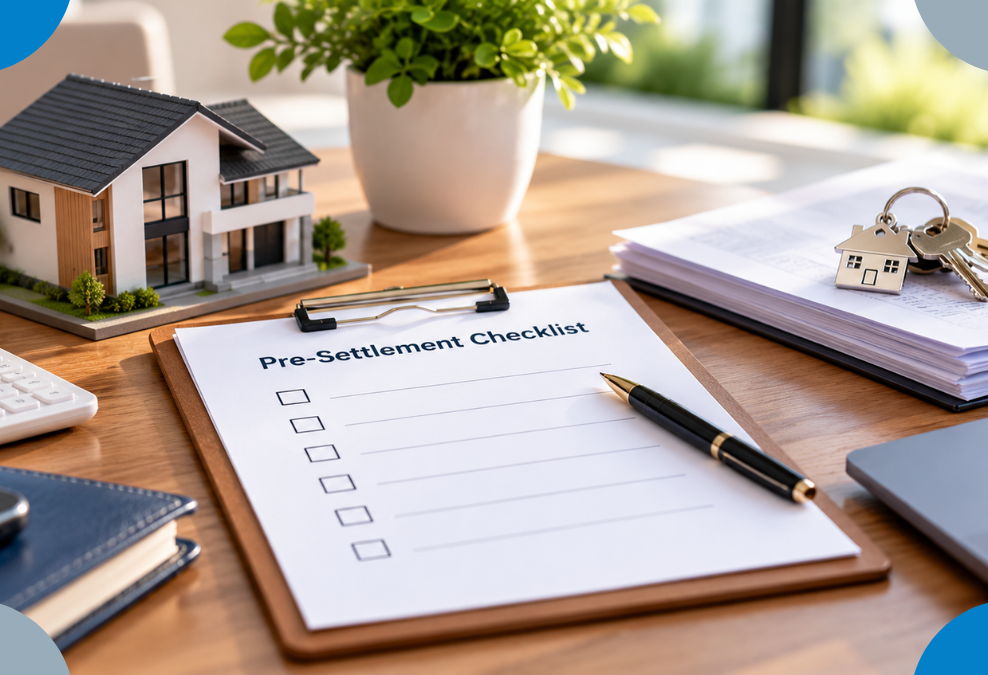
Settlement Day Checklist
Preparing a checklist can make settlement less stressful.
Before settlement:
- Confirm unconditional loan approval.
- Transfer any required funds.
- Arrange insurance.
- Complete your final inspection.
- Sign all legal documents.
- Confirm settlement time with your conveyancer.
On settlement day:
- Keep your phone available for updates.
- Wait for confirmation that settlement has occurred.
- Collect your keys.
- Celebrate becoming a homeowner.
After settlement:
- Move into the property.
- Update your address.
- Connect utilities.
- Secure your home.
- Store all purchase documents safely.
Common Settlement Day Mistakes to Avoid
Many first-home buyers can avoid unnecessary complications by steering clear of these common mistakes:
- Making large purchases before settlement.
- Changing jobs or reducing income before settlement.
- Forgetting to organise insurance.
- Skipping the final inspection.
- Transferring settlement funds late.
- Booking removalists before settlement is confirmed.
Waiting for official confirmation before making moving arrangements can help avoid unnecessary costs if delays occur.
Final Thoughts
Settlement day is the final legal step in buying your first home, but it’s also the beginning of an exciting new chapter. By understanding what happens before, during and after settlement, you’ll be better prepared for a smooth handover and can focus on enjoying your new property.
Working closely with your lender, conveyancer and real estate agent—and completing tasks such as your final inspection and insurance arrangements in advance—can help minimise delays and ensure settlement proceeds as planned.
Whether you’re buying a house, townhouse or apartment, knowing what to expect on settlement day gives you confidence as you complete one of life’s biggest financial milestones.
For a complete guide covering every stage of the buying journey—from saving your deposit and choosing a home loan to inspections, government grants and settlement—read The Complete Guide to Buying Your First Home in Australia.
FAQ's
Yes. If both parties agree and all finance and legal requirements have been completed, settlement can sometimes occur earlier than the original date.
Usually not. Settlement is generally handled electronically by your conveyancer, lender and the seller’s legal representatives.
In most cases, yes, provided settlement has been completed and the contract provides vacant possession.
Raise any concerns during the final inspection with your conveyancer as soon as possible. Depending on the circumstances and the contract, the issue may be resolved before settlement or through negotiation.
Once settlement is complete, ownership transfers to you, the keys are released, and you can begin moving into your new home.